




 In a motorcycling world increasingly shaped by electronic innovation, one component has proudly retained its analogue character: The clutch lever, that tactile connection between the rider’s left hand and transmission that defines the riding experience. Honda’s E-Clutch, is reshaping this concept and final frontier of manual control. Reimagined – not erased, but enhanced.
At its simplest, Honda E-Clutch promises something every rider understands instinctively: Faster, smoother gear changes with less effort. But its true significance runs deeper. By blending electronic precision with mechanical familiarity, Honda has created a system that delivers seamless shifts while retaining the feel and freedom of a traditional manual motorcycle.
That phrase, half clutch control, is central to understanding why E-Clutch feels different. A conventional quickshifter momentarily cuts ignition or fuel to unload the gearbox, allowing clutch less upshifts. It’s effective, especially at higher revs, but it can introduce a jolt, particularly at lower speeds. E-Clutch, by contrast, actively manages the clutch itself via electronic actuators. Instead of simply interrupting power, it subtly slips the clutch during the shift, smoothing torque transitions before the rider even perceives them.
The result is a shift that feels fluid rather than abrupt, controlled rather than interrupted. In heavy traffic, during tight roundabouts, or while threading through city congestion, that refinement becomes immediately tangible. The bike remains composed, the rider relaxed, the experience more enjoyable. The broader objective is equally clear: Expand accessibility without diluting engagement.
“The primary objective is to allow a wide range of riders to FUN riding with greater confidence across a broad variety of situations,” says Ono-san. “This has been achieved by further evolving and refining the control logic based on the system originally developed for the 650 class models.”
That system, which debuted on the CB650R and CBR650R, proved that automated clutch control could coexist with a manual gearbox. The new generation, which made its public debut at EICMA 2025 on the XL750 Transalp and CB750 Hornet, builds on that foundation, taking the technology to different engine capacities and riding environments.
A major step forward with the 750 system comes with the integration of Throttle-by-Wire (TBW), unlocking further potential as the E-Clutch’s behaviour becomes adaptive rather than reactive.
“With selectable riding modes now available, the E-Clutch has become easier to use across a wide range of scenarios, from urban commuting to sporty riding, allowing its behaviour to better match the rider’s demands,” explains Ono-san. “In addition, downshifts now incorporate an automatic blip function, enabling smoother and more seamless downshifting.”
Auto-blipping will be familiar territory to sportsbike riders. When downshifting aggressively, a brief throttle blip raises engine speed to match gearbox speed, preventing rear-wheel instability. Traditionally this required finesse and timing. With E-Clutch, the system performs the blip electronically, but crucially, also manages clutch slip simultaneously.
Modern Classic Motorcycle News - Kindle Edition
“Similar to downshifting with a quickshifter, the system blips the throttle to match the engine speed to the appropriate RPM after the downshift,” says Ono-san. “However, because the E-Clutch also engages half-clutch control, it achieves a smoother downshift overall.”
The dual action, throttle matching and controlled clutch slip, creates a downshift that feels almost pre-emptive. There’s less chassis disturbance, less driveline snatch. For riders enjoying a twisty B-road, it means greater stability under braking.
“During rapid deceleration, the load on the rear tire can be reduced, causing the rear wheel rotation to lag behind the vehicle’s actual speed,” explains Ono-san. “If load is reapplied to the rear tire while in this state, the mismatch cannot be fully absorbed, resulting in wheel hop. The system detects this condition and applies half-clutch control. By allowing the clutch to slip rather than the tire, vehicle stability is improved.”
This rear-wheel hop mitigation first appears in Honda’s 750 series models, including the Honda Transalp. It marks an evolution in E-Clutch’s role, from convenience feature to active stability enhancer. Yet implementing such control across multiple engine platforms is no simple software update. Each engine configuration behaves differently.
“Each engine had its own characteristics, so it required settings tailored accordingly,” says Ono-san. “In particular, we struggled with accommodating differences in rotational fluctuations, as well as variations in engine response and torque delivery.”
An inline four spins differently to a parallel twin. Torque pulses, crank inertia, throttle response curves, all influence how a clutch must engage or slip. The engineering challenge lay in mapping those characteristics precisely enough that riders never sense the calculation behind the curtain.
Riding modes add another layer of nuance. In Rain, throttle response is softened; in Sport, it sharpens. Because TBW decouples grip rotation from actual butterfly valve opening, the clutch must interpret not just what the rider is doing, but what the engine will do next.
“Depending on the selected mode, such as RAIN or SPORT, the actual throttle butterfly opening varies relative to the grip opening,” explains Ono-san. “The E-Clutch performs appropriate clutch control in accordance with these changes in butterfly valve opening.”
In practical terms, that means a consistent feel. Whether riding cautiously in wet conditions or enjoying a dry mountain pass, clutch engagement remains intuitive and proportionate.
Off road, the system’s benefits become even clearer. On adventure machines, riders frequently juggle balance, throttle, braking and terrain reading simultaneously.
“First, the presence of the E-Clutch eliminates concerns about engine stalling,” says Ono-san. “It also removes the need to worry about operating the clutch lever. As a result, riders can focus on riding with greater confidence during off-road conditions, where increased attention to surface conditions is required.”
On loose terrain, where traction can fluctuate unpredictably, the 750 series system goes further. It can execute appropriate upshifts even when the rear tyre is slipping under acceleration, maintaining drive without compounding instability. Despite all this automation, Ono-san was adamant about preserving familiarity.
“We were committed to a configuration that does not change the control layout,” he emphasises. “The clutch lever is installed in the same way as before, and without any special operation, simply pulling the clutch lever instantly provides the same feel and operation as a conventional manual motorcycle.”
That decision underlines a philosophical difference. E-Clutch is not a replacement for manual riding; it is an augmentation. Riders can ignore it entirely and operate the clutch as usual. Or they can let the system handle routine modulation while they focus on lines, braking markers or traffic. It also has a trick up its sleeve for riders who want that traditional engagement.
“We enabled the E-Clutch to be turned off for situations where the rider does not want the clutch to disengage automatically, for example, during low-speed riding in gymkhana, where you may want to run right at the edge of idle speed,” says Ono-san. “We believe that being able to revert completely to the same operation as a manual motorcycle is a unique advantage that other automatic clutch-control systems do not offer.”
It’s a small switch with big symbolic weight; the choice remains in the rider’s hands. Yet perhaps E-Clutch’s most impressive achievement is how invisible all of this feels from the saddle.
“We evolved the control logic in accordance with the vehicle characteristics and usability, maximizing the value the system can deliver,” says Ono-san. “In addition to functional enhancements such as coordination with TBW, refinements have also been made in finer details to improve the feel of vehicle launch and gear shifting.”
E-Clutch does not shout about its presence. It simply removes friction; mechanical and mental. It reduces fatigue in traffic, increases composure under braking, expands confidence off road and sharpens precision on spirited rides. For new riders, it lowers barriers. For experienced riders, it smooths edges without dulling engagement.
In doing so, the boundary between manual and automatic has been quietly redrawn. The clutch lever remains. The gearbox remains. The rider remains central. But the invisible intelligence now woven into that relationship hints at a future where technology supports rather than supplants.
And perhaps that is E-Clutch’s most compelling innovation: it doesn’t change how motorcycles are ridden, but that it redefines how they feel every shift, every start, every stop.

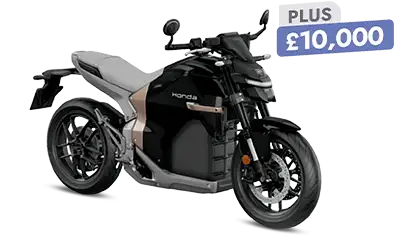
Win a Honda WN7 + £10,000


**************************************
Support Modern Classic Motorcycle News and become a YouTube Member for just £5 per month. Members help keep the channel independent and receive extra value, including digital issues of M.C.M. News Magazine join here:
Out Now on Kindle
Watch, like and subscribe to our Youtube channel
Get These Awesome Perks With Our YouTube Membership!: Join Our YouTube Membership and Save – Get two digital issues of Modern Classic Motorcycle News per month for price of one join here:
👍 Like | 💬 Comment | 🔔 Subscribe for more modern classic motorcycle content


For more Honda Motorcycles UK news, check out our dedicated page Honda Motorcycles UK News
or head to the official Honda Motorcycles UK website honda.co.uk/motorcycles.html.
About Honda Motorcycles
Honda is the world’s largest motorcycle manufacturer, founded in 1948 by Soichiro Honda. The company is known for producing reliable, high-quality motorcycles and is the world’s largest manufacturer of internal combustion engines. Honda’s early focus on reliable four-stroke engines and innovative designs, like the highly successful Super Cub, helped it become a global leader in the industry.
Instagram: @hondaukmotorcycles
YouTube: @HondaMotorcyclesEU
Facebook: @HondaMotoUK
* Disclosure: This page may contain affiliate links, which means I may earn a commission (at no cost to you) if you click on the link and make a purchase. Any money made goes straight back into the website and magazine. Your support is appreciated!